Showing posts with label south india tour. Show all posts

Saturday, 16 November 2013

Badami - Blend Art And Adventure At The Spellbinding Caves Of Badami

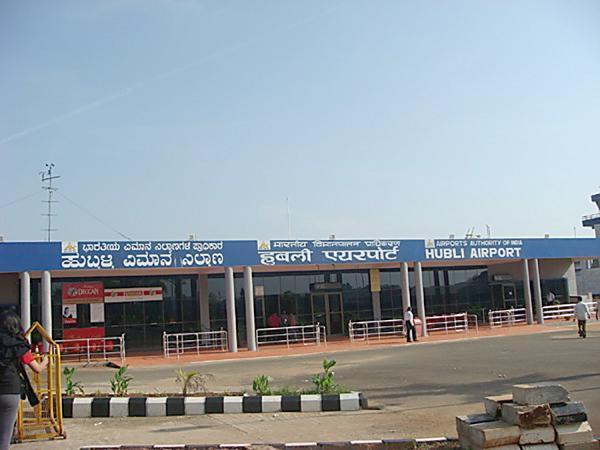
A picturesque town in the Bagalkot district of Karnataka, Badami is situated by the Agastya Lake. This town was previously known as Vatapi, which according to legend was the name of the wicked Asura slain by sage Agastya, christening this town Vatapi. The Chalukyas, the erstwhile rulers of Karnataka and Andhra Pradesh during the sixth and eighth centuries renamed Vatapi to Badami. The royal Chalukya family is famed for their spectacular Dravidian architecture finely woven with the Nagara mode of North India. Badami is a town of historical and religious importance for its majestic rock cut temples created of red sandstone surrounding the Agastya lake.  Visitors looking to visit Badami can make arrangements by air, rail or road. Hubli and Belgaum are the nearest airports with connectivity to Mumbai and Bangalore, the Badami railway station which is five kilometres from the nearest bus stand and through wide, smooth roads from Bangalore, Hubli, Gadag, Solanpur and Bijapur.


Within the town, one can commute by Auto Rickshaw, taxis and buses. The most popular travel route is Hubli-Badami-Hampi where one gets to visit architectural marvels in Karnataka in the span of about five days. The best season to visit Badami is between winter and summer, during the October-March span. Some of the popular tourist destinations within this scenic town are outlined below.

 Badami Cave Temples
Attraction: Monolith rock-cut temples and exquisite sculptures
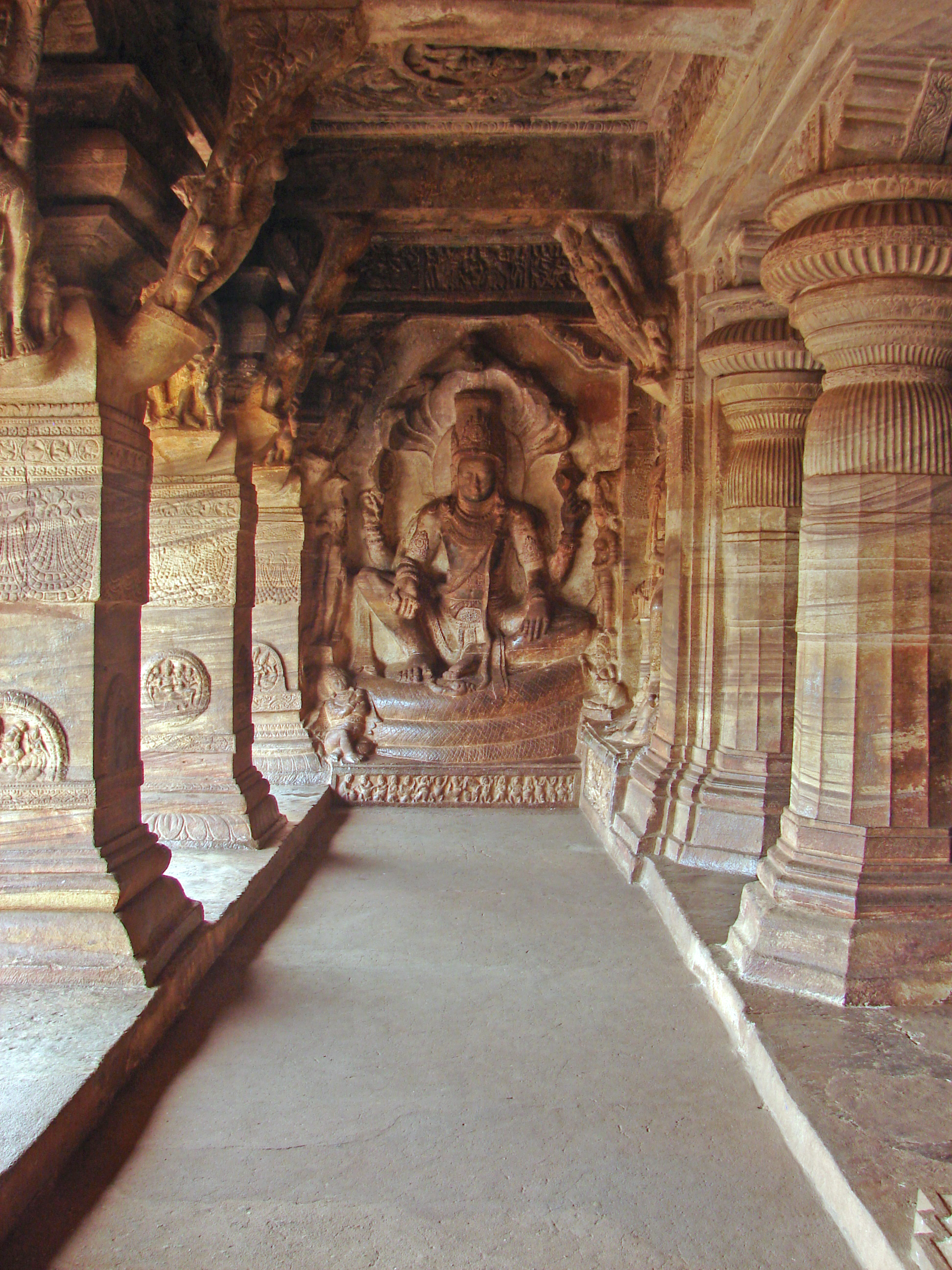
The rock-cut Badami temples were sculpted between the late sixth century and early eighth centuries. These cave temples feature carvings depicting the great Chalukya rulers and their grand lifestyles as well as the benevolent and secular nature of the reign, with a large number of sculptures and wall carvings representing Hindu idols and God as well as the Buddhist and Jain way of life. Many temples are carved out of a single rock and bear witness to the craftsmanship and skill of the great sculptors of the age. The four cave temples are famous world over for their architectural prowess.


 Archaeological Museum
Attraction: Storehouse of cultural artefacts and beautiful sculptures
The museum is an excellent medium for historians and tourists to relive the age of the Chalukyas. The museum houses the finest sculptures and artefacts from the glory days of the Chalukyas. The Lajja-Gauri image of the fertility cult that once flourished in the area is a rare and unique item preserved in this museum. One can visit the archaeological museum between 10 a.m. and 5 p.m. from Saturday to Thursday.


The Bhutanatha temple
Attraction : Beautifully carved shrine in a scenic location
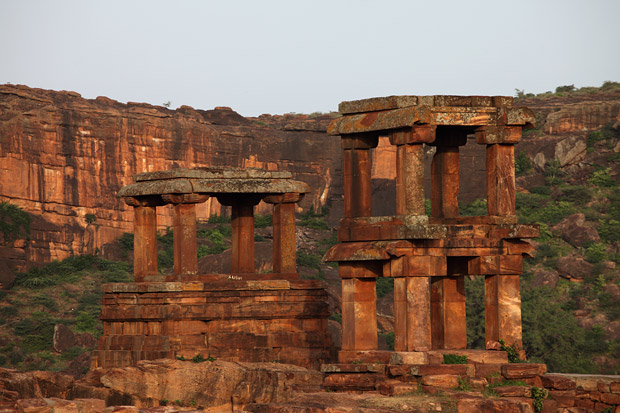
Visitors to Badami can also offer prayers at the Bhutanatha temple that houses a small but beautifully crafted shrine. The temple has been in existence since the early fifth century, one of the few surviving structures of the Chalukya period, also bearing testimony to the tolerance and craftsmanship of the age. The shrine is located facing a shimmering lake, making for a calm and tranquil atmosphere for devotees to offer prayers.


Badami Fort
Attraction: An edifice of historical value, popular for its stunning view of the cliff overlooking the famous cave temples.
The famous Badami fort is a must-see for tourists visiting the architectural hub of Badami. It lies to the East of the Bhuthnath temple, and is ensconced among lush green trees, resting atop a steep cliff, overlooking the fabulous Badami cave temples. Tourists are required to negotiate a steep climb and are rewarded with a spectacular view of the valley and small yet historically important shrines that dot the ascent. The fort houses a temple that showcases the grandeur and splendour typical of the Chalukyas.


 Entry Fee:
Citizens of India and visitors from SAARC countries including Bangladesh, Bhutan, Nepal, Sri Lanka, Maldives, Pakistan and Afghanistan and BIMSTEC Countries including Thailand and Myanmar pay a rate of Rs. 5 per head.

Others:
US $2 or Indian Rs. 100/- per head

Plan a trip with family and friends to the idyllic town of Badami for the perfect blend of history and scenery. 


Bidar- The Land Of Unique Handcrafted Bidri Art And Persian Grandeur


Located on the Deccan Plateau, Bidar is situated in the North-East region of Karnataka. Famous for monuments and temples, Bidar rivals the North in architectural beauty and splendour. This city is best known for historical monuments dating back to the Bahmani era. This historical city also has temples, Masjids and monuments from an array of Kingdoms and ruling emperors including the Adil Shahi, Pre-Kaktiya, Bahamani, Tughlaq, Nizam and  Mughal periods. This city is popular for fusion architecture where Hindu, Turkish and Persian craftsmen have created architectural marvels with elements of different architectural styles to offer visitors breathtaking structures, exclusive to the city. Bidar offers tourists and pilgrims ample proof of its rulers' architectural prowess.


One can reach this destination via road, rail or air with the nearest airport at Hyderabad. Karnataka state transport offers buses that ply from major cities in the state to Bidar. Those travelling by train can alight at Hyderabad, which also has the closest railway station.
Outlined below are important tourist destinations in Bidar.


Bidar Fort
Attraction: Battle-station and an aesthetic structure
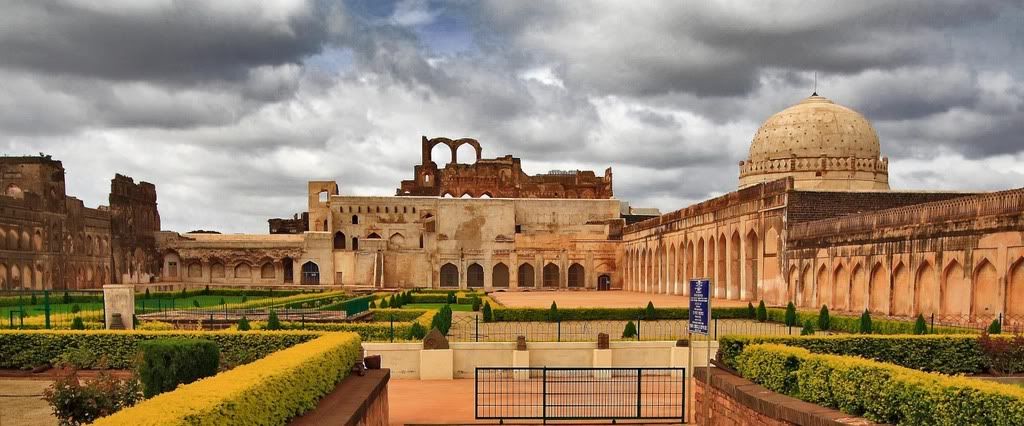
Bidar Fort is one of the most formidable and robust forts in the country. Built on the brink of the Deccan plateau, the fort served as a battle-station for warriors protecting the city. Bidar fort has five gateways for entry into the fort. Reliable historical sources reveal that several  engineers and eminent architects were employed to design and build the fort.


Bahamani Tombs
Attraction: Mausoleums at Ashtoor
Tourists travelling to Bidar must visit the famous Bahamani tombs, huge sepulchres and mausoleums located at Ashtoor, about 4 kilometres east of Bidar.  These are grand structures built in honour of the departed rulers and warriors of yesteryear, to honour their years in service or as a ruler.  There are twelve tombs placed in a row making for an impressive sight. These are massive structures with grand arches, lofty domes and niches. The interior of these monuments is well decorated with beautiful paintings.


Jharani Narasimha Cave Temple
Attraction: Temple with a canal
One of the ancient Hindy temples, this cave temple is dedicated to the revered Lord Narasimha. The temple has been excavated in a tunnel, an architectural marvel and a rare structure in all of India. According to legend, the Lord Vishnu slew the giant Jharasura after destroying Hiranyakashyap. To visit the deity, one must wade through a canal that is 91 meters long, with a continuous water flow, a depth of about 1.4 meters. The temple attracts devotees from all over the world.


Solah Khamb Mosque
Attraction: Largest mosque in India
This mosque is the largest in the country with magnificent columns, domes and arches. Also called the Zanana Masjid, this edifice is located in the Zanana enclosure of Bidar. It is supported by 16 grand pillars in the front, making for a beautifully designed structure.


 Papnas Temple
Attraction: Holy pilgrim centre housing a large cistern
Papanash is Kannada signifies the annihilation of all sins and evil. This temple is a popular pilgrim spot, built to destroy evil in the South. At its foot is a cistern measuring 16 feet by 14 feet, fed by a natural spring throughout the day. To the North of the temple is a small tank, believed to be in existence since the Ramayana times.

Bidri Ware
Attraction: Rare art form in Bidar
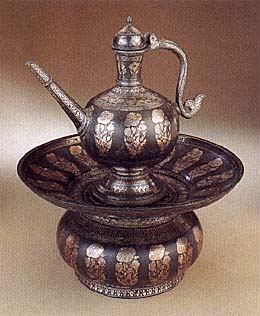
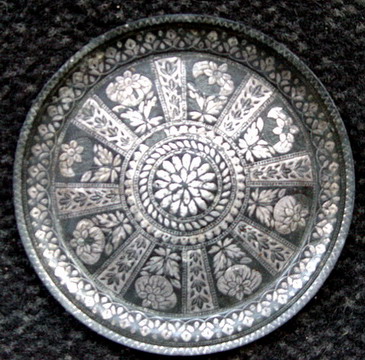
Bidri ware is an integral part of the Bidar Heritage. This signifies a special style of work called "Damascending"in Silver. This fantastic art form was developed in Bidar, after its introduction to the city from Iran around 1422 AD. The art involves a sharp contrast between a black oxidized background and lustrous silver carving in-laid to lend a rare beauty to Bidri Ware. Articles traditionally crafted using this art form include hookahs, water jugs, candle sticks, wash basins, crockery, dishes, cosmetic boxes and flower vases.


Entry Fee :
No entry fee.

Visit Bidar for a wonderful trip filled with fun and frolic with your family and friends. 


Gadag- Witness Exquisite Architecture Steeped In Spellbinding History At Gadag

Gadag- Witness Exquisite Architecture Steeped In Spellbinding History At Gadag

This idyllic temple city is dotted with exquisite monuments and temples showcasing the grandeur of the age of the Chalukyas. The temples in the city were built between the eleventh and twelfth centuries during the Kalyani-Chalukya period. Gadag is famous as a Jain stronghold. Among the many revered temples are the two most important structures that draw thousands of pilgrims every year - The Jain temples dedicated to Mahaveera and Parshvanatha Thirthankara. One can visit Gadag by road or rail. Visitors to Gadag can avail Karnataka state transport buses or take the train from Bangalore, Hospet and Hubli to the Gadag railway station.

 Some of the popular tourist destinations in and around Gadag are as follows. 

Trikuteshwara temple complex
Attraction: Architectural finesse of the Chalukya reign
Bearing witness to the grandeur and grace of Chalukya architecture, The Trikuteshwara temple is a marvellous structure dedicated to the Goddess Saraswati, the goddess of learning and knowledge. This temple was built between the sixth and eighth century by the Chalukyas and is known all over the South for its beauty and majesty.


Veeranarayana Temple
Attraction: Holy Pilgrimage centre
This temple draws thousands of devotees from all over the country. Built in the early eleventh century, the temple also has a Matha founded by the Saint Tontada Siddalingeshwar Swamiji who was an accomplished Yogi. The Matha was built in the twelfth century.

Jumma Masjid
Attraction: Exquisite Islamic monument
The Jumma Masjid is a finely constructed monument where over six hundred Muslim devotees can offer prayers to the Lord. The masjid was built during the seventeenth and eighteenth centuries when Gadag was ruled by the Mohammadean Kings before the reins were passed on to the Marathas and later the East India Company.


Lakkundi
Attraction: Famous for 101 stepped wells
Lakkundi is located about 12 kilometres from Gadag. Once the grand Capital city of the Chalukya empire, this city is famous for its 101 stepped wells known as Pushkarni or Kalyani. Lakkundi is also famous for a multitude of beautiful temples and the famous Jain Basadi. The  Archaeological Survey of India has maintained a rich collection of sculptures from the age of the Chalukyas in the sculpture gallery.


Magadi Bird Sanctuary
Attraction: Biodiversity and bird watching
Magadi Bird Sanctuary is one of the most popular biodiversity spots in the South. It is located about 26 kilometres from Gagad, created at the Magadi tank. Besides lush flora and fauna, one can also indulge in bird watching, a popular hobby for nature enthusiasts. Gadag is home to remarkable migratory and non-migratory birds and is a hotspot for spotters and bird enthusiasts. The sanctuary is well maintained and offers tourists and interesting visit when on a trip to this pretty city.


Entry Fee:
Citizens of India and visitors from the nations of  SAARC  which include Bangladesh, Nepal, Sri Lanka, Bhutan, Maldives, Pakistan and Afghanistan and BIMSTEC Countries including Thailand and Myanmar are charged Rs. 5/- per head. Visitors from other countries are charged US $2 or Indian Rs. 100/- per head. Also, Gadag provides free entry for children up to 15 years.

Enjoy the sights and sounds of Gadag, home to beautiful Chalukya temples and monuments.


Hampi- Travel Back In Time To The Glorious Vijayanagara Empire At Hampi

A UNESCO World Heritage site, Hampi is one of the most famous historical spots across the globe. This town in Karnataka has featured in popular English movies for its exquisite architectural offering, the pride of the vastly wealthy and advanced Vijayanagara empire. Hampi is located near Hospet town in Karnataka and served as the Capital of the revered Vijayanagara empire, a stronghold of the Kings of the age. Besides its main attraction, the superbly carved temples, the vast stretches of hills forming a magnificent backdrop to the temples adds beauty and splendour to this heritage town. Hampi is sanctified town and is revered in the eyes of devout Hindus as it is the Pampakshethra - home of Lady Pampa, daughter of Lord Brahma and venerable wife and companion to Lord Shiva. During the glory days of the old, Hampi was a thriving commercial hub of the Empire with an abundance of precious stones and gems, most popular for trading horses and diamonds!


A visitor's haven, this idyllic town is bordered by lush green valleys and rocky hills bordering the most beautiful temples in the South. Other important tourist spots include royal pavilions, treasury buildings, ancient markets, the palace remains, aquatic structures including public baths, bastions and public platforms. October to March is the best season for tourists looking to witness the splendour of this former Vijayanagara stronghold.


One can visit Hampi via air, road and rail. The nearest airport is Hubli which is connected to major cities across the country. The closest railway station is the Hospet junction about thirteen kilometres away from Hampi with frequent trains like Hyderabad, Goa and Bangalore arriving at this junction. One can reach Hampi by road through State transport buses that ply between Hampi and Hospet. Within Hampi, one can commute through taxis, motorcycles, cars and rickshaws.

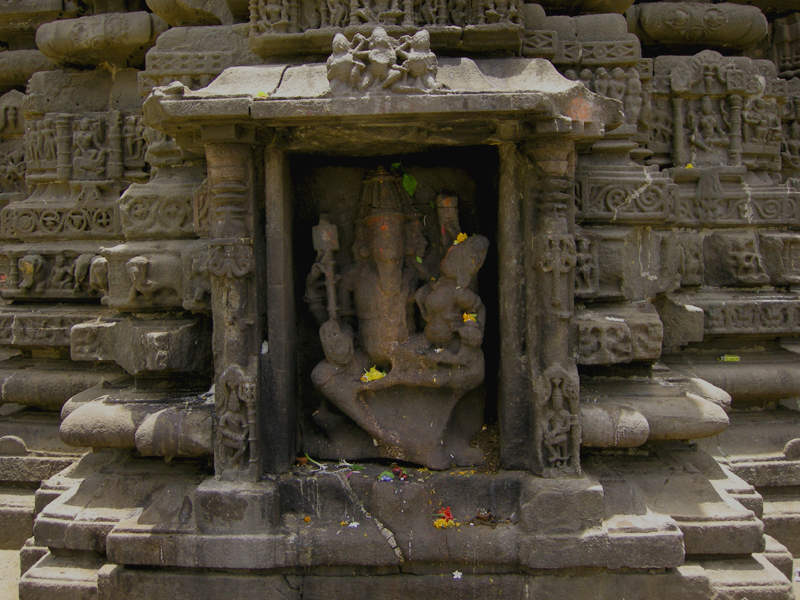
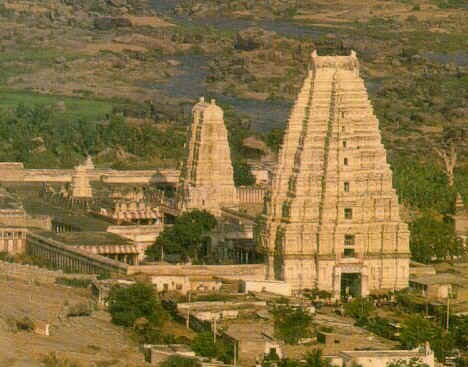
Tourists can visit popular sightseeing spots and temples that include the Virupaksha temple, an exquisitely carved temple devoted to Hindu deities, the Vijaya Vittala temple dedicated to the Vijayanagar empire, the gigantic Queens Bath, a renowned public structure, the beautiful Lotus Mahal, the sacred Elephant stables, the world famous Hazara Rama temple demonstrating the architectural prowess of the craftsmen of the age, Archaeological museum, the storehouse of local artefacts and marvellous sculptures, the Ganesha sculptures, Pushkarni, the Lakshmimarasimha and the Badavalinga.  


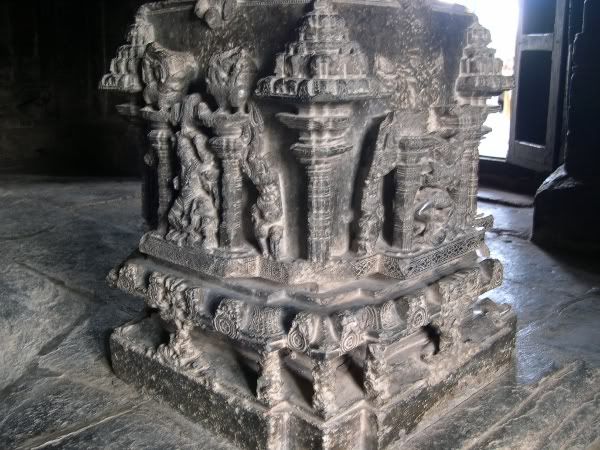
Among the most famous temples in Hampi is the splendid Vijaya Vittala temple, known the world over not only for its magnificent carvings and sculptures but for the 56 musical pillars created to emanate 56 different musical notes covering different musical instruments! A battalion of archaeologists have yet to uncover the secret of this unique temple, catapulting this remarkable temple to the list of the  world's most incredible historical edifices.


The golden rays from a glorious sunset turn the temples of Hampi to creations of pure gold, a breathtaking sight for tourists and first time visitors.


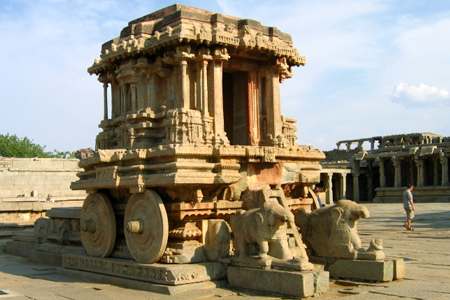
Among the famous places to visit in Hampi include the Lakshmi Narasimha, a monolithic structure, the exquisite Stone chariot and the massive Ganesha statues.

Entry Fee:
For Indian citizens the rate is Rs. 10/- per head and there is no entry fee for the children below 12 years. 
For foreigners: $5 per head. This ticket is valid for one day to visit three monuments of the Vittala Temple, the Elephant stables and the Zenena Enclosure.
Entry fee to the Archaeological Museum is Rs.5/- per head.

Hampi is one of the most beautiful spots to visit in the South. Plan a visit to the majestic temples to appreciate fine art and architecture, not found anywhere else in the world!


Murudeshwar- Lord Shiva's Divine Abode

The vibrant temple town, known for its scenic beauty and rich history, Murudeshwar, is a popular tourist destination in Karnataka located in the Bhatkal Taluk of North Karnataka, overlooking the Arabian Sea. 

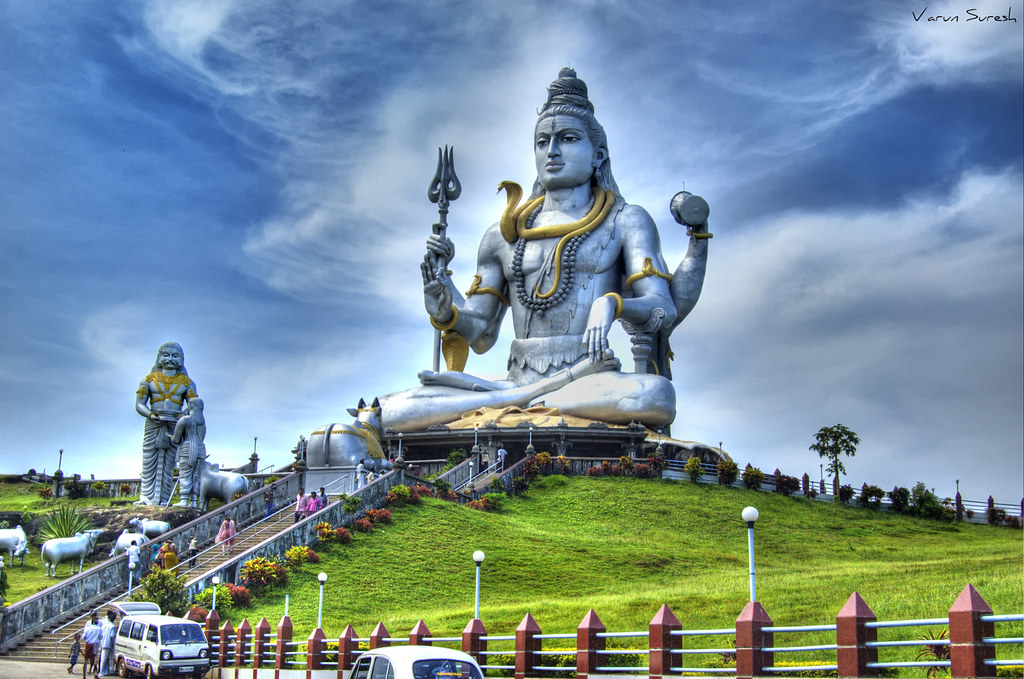
This township is famous world over for its massive Shiva statue, second tallest in the country. This town is well connected by road, rail and air, making it easy for travellers to access the temple town. The nearest airport is Mangalore where flights are operated from Bangalore, Mumbai and Chennai. One can also reach Murudeshwar through state buses plying from Bangalore. One of the best journeys reported by numerous tourists is through the Indian Railways, passing through the scenic cities of Mangalore or through picturesque Goa via Konkan Railway. Those travelling via private vehicles can catch NH-17 between Mangalore and Mumbai to Murudeshwar.  Tourists can visit this lovely destination throughout the year.

 Murudeshwar is a pilgrim's haven, offering those on a religious excursion a chance to witness a splendid art and architecture through monumental entrance arches, exquisite temple carving and beautiful sculptures. The Murudeshwar temple and beach are the main tourist attractions in this township. The temple is guarded by finely crafted life-sized elephants created in concrete, making for a spectacular entrance. The elephants are a part of a pilgrim's progress through Karnataka and are revered by devotees for the strength they display in protecting and securing the temple. One can witness terrific attention to detail paid by the sculptors while creating the temple, the arches and the elephants. The deity residing in the temple is the Shivalinga, believed to have been formed when Ravana, arch enemy of Lord Rama threw aside the cloth covering the Atmalinga at Gokarana. This temple has magnificent carvings and statuettes dating back thousands of years. The Rajagopura at the temple entrance is the tallest in the world, standing at a height of 249 feet. The Gopura has twenty two floors and is the only Gopura in the world fit with elevators for public convenience.


One can also visit Kanduka Hill to view fabulous sculptures of the age. These are exquisite creations, made by the most skilled craftsmen and sculptors residing in the town, in honour of Royal Kings and Queens and revered Gods and Goddesses. The Geetopadesha,  young Ganesh receiving the Atmalinga from Ravana and the Sun Chariot are a few magnificent structures that dot the picturesque landscape of the hill. At the hilltop is the famous Shiva statue, drawing devotees from all over the world each year. Underneath the statue is a large cavern with life-size sculptures depicting the story of Murudeshwar, narrated to visitors through an interesting light and sound show.

Tourists looking to relax on sandy shores can visit the Murudeshwar beach, with warm white sands bordering the azure waters of the Arabian Sea, roaring to the West, and the calm, placid waters of a gentle river, flowing to the East.


Entry Fee:
No entry fee.

Visit Murudeshwar with friends and family for a relaxing day out at the beach or a visit to the historically important temple, a marvel in Indian architecture.


Pattadakal- Picturesque Temple Town Of The Chalukyas

Pattadakal is a world heritage site in Karnataka, and is situated on the bank of the Malaprabha River in Bagalkot district, located in close proximity to the township of Aihole and the temple city of Badami.  Pattadakal was also a Chalukya stronghold, housing a number of beautifully constructed monuments. This town is famous not only for magnificent Chalukyan creations but was also a holy site as the Royal coronation was held here. In 1987, UNESCO placed Pattadakal on its list of World Heritage sites.

One can visit this town via air, rail or road. The nearest airport is Belgaum, where airline from Bangalore, Mumbai and Chennai operate flights. Badami is the closest rail head, with trains from Solapur and Ahmedabad arriving here. State tourist buses operate regular buses to Pattadakal from Bijapur, Bengaluru, Hubli and Belgaum.

A few places of interest in Pattadakal are outlined as follows.


Patadkkal temple complex
Attraction: Blend of Nagara and Dravidian style temple architecture
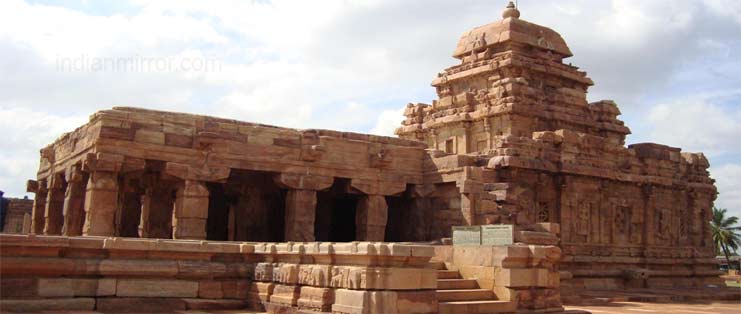
Built in the early eighth century, the temples in Pattadakal are a result of the Chalukya experimentation on temple architecture. The temple complex is a finely woven artistic web of the Dravidian or Southern style of temple architecture and the Nagara or the Northern style of temple architecture. Also famous are the temples including a Jain sanctuary, surrounded by a number of plinths and shrines, an experimental fusion of various architectural styles of the country. The town is famous for Chalukya art and temple inscriptions. The biggest temple in the complex is the Virupaksha, enclosed by a large Prakara. Historians who have deciphered the inscriptions believe that the temple was built by Lokamahadevi, the famous consort of King Vikramaditya to commemorate his victories over the Pallava Kings and his occupation of Kanchi.

Sangameshwara Temple
Attraction: Oldest temple in Pattadakal
Previously known as Vijayewara, the Sangameshwara temple is the oldest temple in the Pattadakal temple complex. A grand structure, with the outer walls painted and carved with the figurines of Lords Nataraja and Ugranarasimha.


The Mallikarjuna Temple
Attraction: An edifice built to honour King Vikramaditya II
This temple is an architectural wonder, albeit a smaller version of the Virupaksha temple. Built by the second queen of King Vikramaditya II, the temple was constructed by Rani Trilokyamahadevi in 745 AD in honour of her King's victory over the Pallavas. The temple was built immediately after the construction of the Virupaksha temple and in close proximity to it. This temple, though small is very beautiful and attests the skill and craftsmanship of the sculptors of the age.


Other noteworthy temples in the complex include the Kashivisvanatha Temple, the Kadasiddhesvara and Jambulingeswara temples, the Galganatha temple and a Jain Temple.

Sculpture Gallery
Attraction: Storehouse of sculptures
This gallery is maintained by the Archaeological survey of India within the temple complex and houses finely carved artefacts from the period of King Vikramaditya.


Entry Fee: Entry fee for those above 12 years is Rs. 5.00, free entry on Fridays.

Visit the Pattadakal temple complex to witness the splendour and magnificence of the Kings of the South.


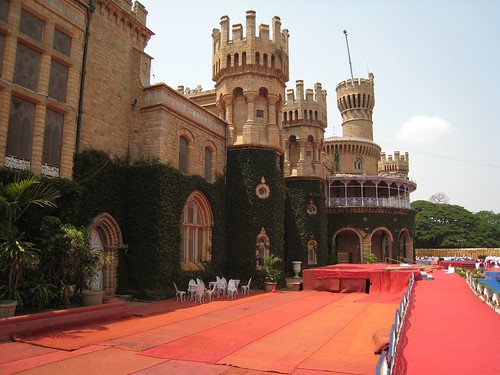
Bangalore Palace- A treat to the sore eye!

The ever so majestic Bangalore Palace- A treat to the sore eye!

Ever so often we find that in our eagerness to visit new places we tend to forget places that are almost in our neighborhood. One such place that many people living in Bangalore will come across is the Bangalore Palace

The famous Mysore Palace which people from Bangalore frequent so often has taken away most of this palace’s sheen. Though it isn’t in anyway comparable to the palace in Mysore, there are a few nuances that might manage to get your attention. For anyone wanting to spend a good evening in Bangalore this palace can provide more than what you expect from it.

The Bangalore Palace is aptly placed according to its name in the center of the city. The Tudor style architectural manner and resemblance to the Windsor Castle in England has managed to attract a lot of history lovers here. Built in the year 1887, the place belongs to the Woodeyar dynasty and is currently owned by Srikantha Datta Narasimharaja Wodeyar from Mysore. The verdant gardens surrounding the castle seem to be a very nice place for some leisure. The fact that it is placed in between the urban environment of the city gives it a stunning contrast from the other buildings.

The beauty of the castle begins right from its door which is marvelously carved. As you enter the castle you will notice a wide variety of woodwork of the 19th century which is sure to take the breath out of anyone. The castle is extremely well furnished and the extensive paintings and carvings found in its walls is indeed a treat to the eye. The interior of the palace is filled with intricate artwork, ceiling paintings, floral décor etc. 


The courtyard is the first thing you will come across upon entering the palace followed by a Ballroom. The rooms of notice in the first floor were the Durbar Hall where the King mostly held private parties. Plus there are other antiques present here including an elephant head and art displays that have been wonderfully placed to add to the beauty of the room and the palace.


The palace is widely used today for events like concerts, programs and other exhibitions and they are open to the public. Certain preferred groups are allowed to hold private parties within the palace and the place is also rented to movie groups as it proves to be a great location to shoot films and advertisements.


To get to Bangalore Palace one can simply board a bus heading towards Carmel College from Kempegowda bus station. From Carmel College the place is just a few walks away. 

Upon reaching the place the entry to the palace is Rs.100 followed by a recommended audio guide which costs around 175 bucks. If you want to make use of cameras then you will have to pay Rs.500 extra and around 1000 bucks if it is a video camera. The rates are completely revised for the foreigners and seem a bit on the higher side. The entrance fee is around 300 and other rates are comparatively higher for non-Indians which is a let down if you are a tourist.